
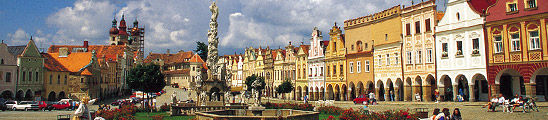
Vysočina Region
- Official name: Vysočina (Vysočina Region)
- Population: 513,195
- Area: 6,796 km2
- Number of municipalities: 704, of which 34 are towns
- NUTS II: South-East
The Vysočina Region prides itself on no less than three UNESCO World Heritage List landmarks. The name stems from the fact that the majority of the region is located in the Bohemian-Moravian Highlands, an area of raised undulated landscape straddling the border of historic Bohemia and Moravia.
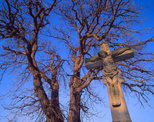 Generations of settlers turned the original impenetrable primeval forest into harmonious cultivated landscape, characterised by a mosaic of forests, groves, fields, meadows and pastures. Almost every brook is dammed to create several fishponds.
Natural conditions dispersed the population of Vysočina into more than a thousand settlements, connected by a dense network of roads. The Vysočina Region is characterised by small villages, which are located close to a local centre, which is usually a quiet small town of three to ten thousand inhabitants. Only four towns within the region exceed 20,000, and the regional capital of Jihlava has only 50,000 inhabitants.
Historic border between Bohemia and Moravia
The local “metropolis”, therefore, is Jihlava, the oldest mining town in the Czech Lands, which was one of the richest cities in the Czech Kingdom, during medieval times, primarily thanks to silver mining. Jihlava straddles the former historic border between Bohemia and Moravia. The region is located in the transport and population centre of the entire country. The main Czech highway, the D1 Motorway, traverses the region. In recent years, Vysočina’s strategic location has attracted many foreign investors, who tend to locate their production facilities as well as their research and development centres here.
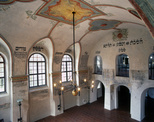 History enriched the region with many attractive sights and historical landmarks. Three of them – the historic centre of the town of Telč, the Pilgrimage Church of Saint John of Nepomuk at Zelená Hora in Žďár nad Sázavou, and the Jewish town and Basilica of St. Procopius in Třebíč – have been placed on the UNESCO World Heritage List. Natural riches include the protected areas of Žďárské vrchy, Železné hory, and Mohelenská Serpentine Steppe National Nature Reserve, Velký Špičák and numerous other smaller nature reserves. One of the main advantages of the Vysočina Region is its clean environment.
Regional projects
Tourism portal
Information system on cross-country skiing trails
Local Government on the Internet
Reference links:
- Official website: extranet.kr-vysocina.cz/uk
- Official tourism portal: www.region-vysocina.cz/en
- Representation in Brussels: www.kr-vysocina.cz/en
- UNESCO Třebíč: www.trebic.cz/unesco/en
- UNESCO Žďár nad Sázavou: www.zdarns.cz/en
- UNESCO Telč: www.telc-etc.cz/telc/EN
Photo Gallery
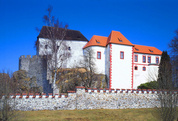
- Kámen
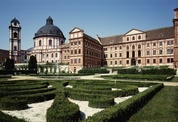
- Jaroměřice nad Rokytnou
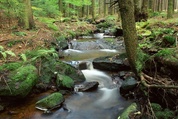
- Čeřínek
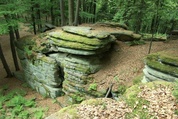
- Lhotka
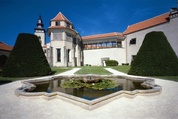
- Telč
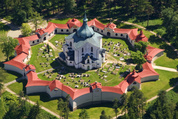
- Žďár nad Sázavou
Last update: 16.8.2011 16:02


